
A Clear Explanation of Gambling House Edge
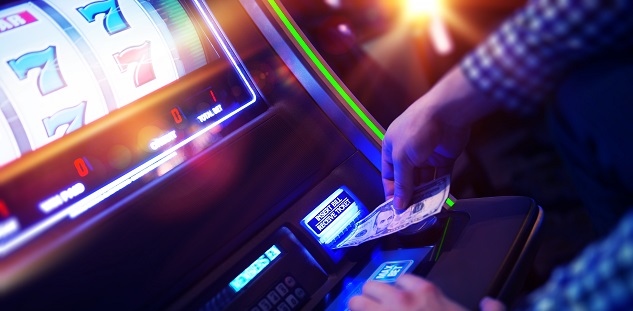
I’ve spent countless hours seeing players sit down at slots and tables without asking the one question that defines every spin, hand, and bet: where does the casino’s advantage come from? The house edge is no mystery, a trick, or a certainty you’ll lose in the short term. It’s a built-in mathematical margin that keeps games running, funds jackpots, and allows a regulated operation like Betmaster Casino possible. I’ll guide you through exactly how the edge works, why it differs from game to game, and how grasping it can change the way you play. Once you see the numbers clearly, you can form sharper decisions without losing any of the fun.
Player Return Rate and How It Relates to the Casino Advantage
RTP, or RTP, is the counterpart of the house edge. If a slot has an RTP of 96%, the mathematical house edge is 4%. I tend to see RTP as the long-term payback percentage, determined over countless spins, not over a one night. At Betmaster Casino, many games show their RTP in the information panel, which I frequently review before putting down a stake. A larger RTP does not imply I’ll win more often in a short session; it signifies the math model provides a bigger portion of all wagers over time. Two slots with matching 96% RTP can act completely differently because of volatility, which I’ll address shortly. RTP and house edge are two approaches of describing the identical underlying arithmetic. When I see a game with a stated RTP of 97.5%, I right away understand the house edge is 2.5%. That clarity is something I’ve come to expect from a adequately licensed casino, and it’s one of the primary things I seek out when reviewing a new title on the site.
Regulation, Impartiality, and How Betmaster Casino Keeps the Edge Transparent
Any percentage I’ve discussed in this article is based on a framework of regulatory oversight and independent testing. Betmaster Casino works under a licence granted by the UK Gambling Commission, which imposes rigorous obligations on game integrity, RNG auditing, and player fund segregation. That implies the house edge I observe displayed is the house edge I truly encounter, verified by certified testing laboratories that scrutinize the algorithms behind each game. I also have access to controlled gambling tools such as deposit caps, reality checks, and self-exclusion choices, all of which enable me remain in control no matter of the mathematical edge. The transparency of RTP figures, paired with explicit bonus conditions and straightforward payment guidelines, provides me certainty that I’m participating in an atmosphere where the edge is revealed rather than obscured. I never have to wonder whether a game is fair, because the regulatory system mandates evidence. That level of transparency is what I value most when I log in, and it’s the reason I keep returning to a platform that considers the house edge as a reality to be comprehended, not a hidden detail to be abused.
The way Bonuses and Wagering Requirements Alter the Effective Edge
Bonuses can briefly shift the effective house edge in the player’s favour, but only if I thoroughly understand the terms attached. A welcome offer that matches my deposit and adds free spins gives me extra ammunition, yet the wagering requirement determines whether that bonus has real value. If I claim a £100 bonus with a 35x wagering requirement, I need to stake £3,500 before I can withdraw any winnings derived from it. During that playthrough, the house edge keeps grinding away on every spin and hand, and I have to factor that into my expected outcome. I always read the key terms on the Betmaster Casino promotions page before I opt in, checking game weighting, maximum bet limits, and time restrictions. Some games contribute 100% toward wagering, while others contribute far less, which raises the cost of clearing the bonus. When I treat a bonus as a way to extend my play rather than a guaranteed profit, I find the experience far more enjoyable. A clear-eyed view of the maths keeps my expectations realistic and my sessions under control.
Table Games: Where Expertise Can Minimize the Advantage
Table games are where the house edge becomes a more personal negotiation between the player and the math. In blackjack, my choices on hitting, standing, splitting, and doubling down directly influence the effective edge. When I adhere to basic strategy charts accurately, I can push the house edge below 1% on many standard variants available at Betmaster Casino. That doesn’t make blackjack a guaranteed moneymaker, but it does imply I’m playing one of the most balanced games in the building. Roulette, on the other hand, provides no skill element on where the ball lands, so the edge is set by the wheel layout. I generally stick to European single-zero wheels whenever possible, because the 2.70% edge is far friendlier than the 5.26% on American double-zero versions. Baccarat and craps also sit on the lower end of the edge spectrum, and I value that Betmaster Casino features multiple table limits so I can wager within my comfort zone. Understanding the edge on each table game assists me to choose where to spend my time, and I never take a seat without knowing the built-in cost of the bets I’m about to place.
Real-time Casino Games: Does the Human Dealer Affect the Edge?
I’m often questioned whether live dealer games possess a different house edge than their digital equivalents, and the answer is straightforward: the math remains the same. A live roulette wheel with a single zero still offers the casino a 2.70% edge, and live blackjack follows the same rules and payouts as the RNG version. What varies is the pace and the atmosphere. Live games proceed at a natural speed, with real cards and real wheels, which can make a session feel more captivating. At Betmaster Casino, the live lobby features blackjack, roulette, baccarat, and game-show-style offerings, all streamed from professional studios. The house edge is built into the game rules, not the dealer’s moves, and every round is subject to the same regulatory scrutiny. I believe that playing live enables me stay more aware of the time and money I’m spending, because there is a human rhythm to the game. The edge stays exactly what the paytable states it is, and I handle it with the same respect I would give any digital table.
Slot machines: Grasping RTP, Volatility, and the Extended Edge
Slots lead the lobby at Betmaster Casino, and I’ve learned that the house edge is only part of the story. Most online slots feature an RTP between 94% and 97%, which translates to a house edge of 3% to 6%. That range might look narrow, but volatility shapes how those percentages unfold. A high-volatility slot with a 96% RTP can swallow a bankroll quickly before providing a large payout, while a low-volatility game with the same RTP tends to produce smaller, more frequent wins. The house edge remains identical in both cases over the long run, but my short-term experience can seem very different. I always review the volatility rating when it’s available, because it helps me align a game to my session goals. Betmaster Casino carries hundreds of slot titles, from classic three-reel fruit machines to modern Megaways games with cascading reels and six-figure jackpot potential. Each one features its own mathematical model, and I make a habit of studying the paytable and rules before I spin, so I know exactly what edge I’m facing.
Deposit Options, Withdrawal Times, and Their Subtle Effect on Your Advantage
Payment processing doesn’t change the mathematical house edge, but it does affect how quickly I can retrieve my winnings and how I manage my bankroll. Betmaster Casino accepts a range of familiar UK payment methods, including Visa, Mastercard, PayPal, Skrill, Neteller, and bank transfer. E-wallet withdrawals are typically processed within 24 hours once approved, while card and bank transfer withdrawals can take between three and five working days. These timelines matter because the longer my money remains in a pending state, the more inclination there is to reverse a withdrawal and keep playing. I always select the fastest available method that suits my preferences, because finalizing a withdrawal quickly helps me keep any gains I’ve made. Deposit limits and session reminders, which I can set directly in my account, also contribute in how I approach the edge. By controlling the flow of funds in and out, I maintain the focus on entertainment rather than chasing losses. The house edge operates during play; smart banking habits ensure I don’t give it extra opportunities.
How exactly the House Edge Gets Calculated in Popular Casino Games
Any game computes its edge in its own way, and I think it is useful to examine concrete instances as opposed to abstract percentages. European roulette, with a single zero, offers the house a 2.70% edge because that one green pocket creates the odds of winning a straight-up bet 1 in 37, while the payout is only 35 to 1. American roulette features a double zero, pushing the edge to 5.26%. Blackjack can fall below 1% when you apply perfect basic strategy, because your decisions directly impact the outcome. Baccarat is in the middle, with a banker bet edge of around 1.06% and a player bet edge of 1.24%. Check out a few benchmarks so you can check at a glance:
- Single-zero roulette (single zero): 2.70% house edge
- Double-zero roulette (double zero): 5.26% house edge
- 21 (with perfect basic strategy): as low as 0.50%
- Baccarat (banker bet): approximately 1.06%
- Slot machines: typically between 2% and 10%, depending on the title
These figures aren’t confidential; they’re public RTP values that I can check directly on the Betmaster Casino platform for most slots and table games. The main takeaway is that the edge isn’t uniform. By choosing games with a lower built-in advantage, I can maximize my bankroll further and grant myself more time at the tables. A lower edge yet doesn’t imply guaranteed profit, and I always consider every session as entertainment first.
What Exactly Is the Casino Edge?
The house advantage is the portion of each wager the casino plans to hold over the long run. View it as a small charge baked into the game, not something deducted from every single bet but something that emerges across thousands or millions of rounds. A 3% casino edge doesn’t mean you’ll lose £3 every time you wager £100. It means the game is designed to return £97 for every £100 wagered over a sufficient timeline. In any single session, variance can drive your balance soaring or falling sharply, but the underlying math never changes. I always inform myself that this edge is what permits betmastercasino trusted welcome bonus to provide a secure, licensed environment with genuine prizes, live dealers, and a continuous stream of new games. Without it, no regulated casino could remain in business, and player protection standards would break down. The edge is the price of playing, like a ticket to a live event, except here you always have a opportunity to leave with more than you started with.